A Review/Reflection of A Tree Grows in Brooklyn by Betty Smith
Devotees of Science Fiction and Fantasy
writing understand the importance of world building. With literature of that
genre there is an implicate agreement between the reader and the author that
the context of the book is not one in which the reader lives in. Gravity will
be different, dogs rule the world, all horses speak out of their… ears, the sky
is green and the grass is blue, and on and on. The world is going to be
different that the ordinary, everyday world that we muggles slough through on a
daily basis. Thus there is a degree of world building with these stories. The
author has to build the world, and then figure out how to share the rules, the
physics, the creatures, and all other aspects that might be different from what
the reader normally expects. Whether it be the giant turtle of DiscWorld, or the geography of the Fire and Ice saga, or the difference
between Dwarves and Elves of Middle Earth (from Lord of the Rings for the 1% of the country that has never
encountered that masterpiece… shame on you), or the role of magic in the realm
of Xanth, the reader needs to learn
how the world works, what it means to live in that world, and the ways in which
the story needs to fit in and will be guided by that world.
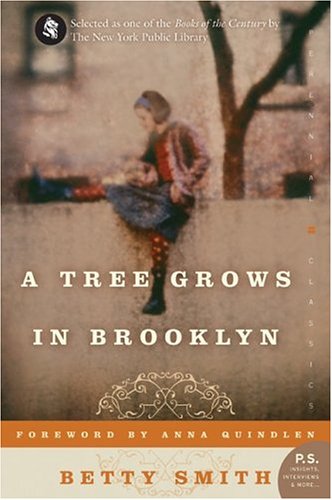
While it is
a far cry from Science Fiction or Fantasy writing, I would argue that Betty
Smith’s book, A Tree Grows in Brooklyn
brilliantly does a similar thing – it creates a world. Yet in this case the
world in question is Brooklyn in the early 1900s. It would have been
interesting and slightly humorous if the book was actually about Gary, Indiana with
the title, A Tree Grows in Brooklyn,
but alas, Smith does not carry such humorous sensibilities with her work.
Perhaps in person she was a real card and cut-up, but not in writing.
Regardless, it is great work speaking to the experience of life in Brooklyn in
the first two decades of the 20th century. Or better said, it is a
world that is carefully, and painstakingly built for the reader Brooklyn in the
early 1900s. We do not get the historical or geographical context in broad
strokes, but instead in depth and brilliance of color. World events like World
War I or the influenza of 1918 are mentioned in the work, but they are
ancillary, secondary to the experience of Brooklyn. We get a dot, a point in
the picture, but that point is described with such detail and care that the
reader can from there place the life and experience of living in Brooklyn in
the larger context of the American experience. It is a thick description (to
borrow the term from the late ethnographer and anthropologist Clifford Geertz)
of a place and a time that is told with such care and delicacy that it feels
like unwrapping a gift one fold of wrapping paper at a time. It is not a
plot-driven work, but instead one that is centered on the experience of living
and being in a certain point and time. It is over 400 pages of world building
and it is beautifully and masterfully done.
Because the work is focused with such detail on the experiences
of the main character Francie Nolan and her family, there are many moments that
one can call on for comment. For this post I would like to lift up one particular
event; when Francie and her family is at a Catholic Mass to remember her
recently deceased father. While watching and listening to the singing and the
speaking of the Latin Mass, Francie has a revelation:
“Francie believed with
all her heart that the altar was Calvary and that again Jesus was offered up as
a sacrifice. As she listened to the consecrations, one for His Body and one for
His Blood, she believed that the words of the priest were a sword which
mystically separated the Blood from the Body. And she knew, without knowing how
to explain why, that Jesus was entirely present, Body, Blood, Soul, and
Divinity in the wine in the golden chalice and in the bread on the golden
plate.”
Before I go
any further I should speak to the deep sense of sacramentality that is being
described here. My Catholic readers (do I have any Catholic readers?) will pick
up on this right away perhaps without even realizing it. Those born before Vatican
II, who were raised reading and learning the Baltimore Catechism will likely be
able to connect with this experience more than those born after 1962. To my
Protestant readers who do not have a heightened sensitivity for a sense of
mystery in worship (i.e. sacramentiality), try for a moment to suspend all the
skepticism and doubt and uncertainty that comes out of your reactionary
response to Medieval Catholicism and imagine what it might be like for a 14
year old girl to experience a Latin Mass. It is mysterious. Note what Francie
thinks next:
“‘It’s a beautiful religion,” she
mused, “and I wish I understood it more. No. I don’t want to understand it all.
It’s beautiful because it’s always a mystery, like God Himself is a mystery.
Sometimes I say I don’t believe in God. But I only say that when I’m mad at
Him… Because I do! I do! I believe in God and Jesus and Mary.’”
As a life-long Protestant (and a Baptist at that), I would
leave out the “Mary” part, but that is not the point. Francie feels the pull
between the desire to know and the realization that not knowing deepens the
beauty of the moment. “It’s beautiful because it’s always a mystery…” To
understand everything is to lose something, but to hold to that place of
unknowing is to have a place where the beautiful can enter in. This is a
sensibility that Smith brings to the entire work. She offers great detail, great
depth, but stops at the moment when the mystery needs to remain and does not
explain everything away. For example, Francie loves hearing her father sing as
he comes home late at night. We don’t need to know why, just that it is
profound and powerful. The reader is called to rest in the mystery and in that
find the beauty. The book is replete with moments of beauty and mystery;
moments profound and simple.
In many ways faith is about world-building. We are not
creating the world we live in, but offering explanations and descriptions for
why the world is as it is. We start with certain assumptions and shared beliefs
like the belief in the existence of God and that this God is love. Such a
assumption shapes our view and experience of the world. From there we try to
make sense of our experiences, we try to explain the dissonances, and we try to
understand the world in which we dwell based on those assumptions. Augustine
almost has a nervous breakdown trying to understand how there can be evil in
the world when all is created by God and when God is believed to be good. As a
theologian and as a pastor I try to offer an understanding of evil that fits
within the world of faith that we have embraced. I try to suggest ways to read
scripture that make sense with the particular individual. Churches try to offer
ways of seeing and living in the world that conform with a certain
understanding of faith. This is world building, but can be taken too far. We
all run the risk of explaining too much, of trying to make too much sense in
the world, and losing the beauty and the mystery. “It’s beautiful because it’s
always a mystery.” One of the lessons that I have pulled from this work is that
there is a point when you need to stay in the mystery. We want to have rational
and explanation, but only to a point. There comes a point when we need to fall
into the mystery of creation, of faith, of hope, and of love. There is a beauty
to the mystery in our rituals (like why the sermon takes so stickin’ long), our
prayers, our scripture, and our lives. Explaining away the mystery leads to a
militant, dogmatic faith that demands that one fully believes every little
thing that is said and explained. This is a kind of religion that usually harms
people, that fears questions and curiosity, and that has no sense of play in
the world. There is no mystery in this kind of faith. A faith that holds the
beauty of the mystery is a faith that falls into the space where reason and
mystery meet.
One of the great things about A Tree Grows in Brooklyn is that the mystery is shown to be in the
mundane. The act of making a tin can bank, the purchasing of meat, listening to
parents talk late into the night, and many other examples in the book can be
seen as small, simple, and ordinary. Yet the way Betty Smith describes them,
the world she creates around them, draws the reader into the mystery and the
beauty of each moment.
Those moments of mystical beauty in the arena of faith will
most likely be ordinary, simple, and mundane. Yet we are again and again called
to notice the beauty in those moments and recognize the presence of the divine
in the unexplained mystery.


